Automate the healthcare work your teams still do manually
Reduce repetitive work across patient access, clinical operations, revenue cycle, and back-office workflows by connecting the systems and automating the steps between them.
- Rules
- Integrations
- AI
- Human review
Trusted by healthcare teams in the US and Europe since 2016
The biggest workflow problems live between systems
Staff rarely spend their day inside one system. They move between the EHR, PMS, payer portals, CRM, email, spreadsheets, and clearinghouses, checking information, copying data, updating statuses, and fixing exceptions. That is where automation creates value.
Before
EHR→Human→PMS→Human→Payer portal→Human→Spreadsheet
People act as the integration between systems.
After
Connected systems→Automation→Human exceptions
Systems exchange data; people handle what needs judgment.
What healthcare teams automate with Riseapps
-
Eligibility verification
Check coverage before visits.
-
Scheduling & rescheduling
Automate appointment changes and waitlists.
-
Patient intake
Collect structured information before the visit.
-
Referral processing
Extract, validate, route, and track referrals.
-
Patient outreach
Automate reminders and follow-ups.
-
Prior authorization
Prepare submissions and track status.
-
Claims monitoring
Track claims across clearinghouses and payers.
-
Denial workflows
Categorize denials and route next actions.
-
Coding support
Prepare documentation for coding review.
-
Payment follow-up
Automate routine follow-up steps.
-
Documentation
Create structured drafts from clinical interactions.
-
Care coordination
Route tasks between care-team members.
-
RPM monitoring
Prioritize alerts and exceptions.
-
Pre-visit preparation
Prepare relevant patient context.
-
Post-visit workflows
Follow-ups, questionnaires, and care-plan tasks.
-
Document intake
Read, classify, and file incoming documents.
-
Inbox triage
Sort shared inboxes into the right queues.
-
Credentialing
Track documents, expirations, and applications.
-
Data reconciliation
Find and fix mismatches between systems.
-
Cross-system updates
Propagate changes instead of re-keying them.
-
Operational reporting
Assemble recurring reports automatically.
Not every workflow needs AI
We choose the automation method step by step.
-
Rules
When the logic is predictable.
ExampleAppointment within 48 hours and insurance unverified → trigger an eligibility check.
-
Integrations
When systems need to exchange structured data.
ExamplePatient reschedules in the portal → PMS and EHR update automatically.
-
AI
When the step needs interpretation.
ExampleRead an incoming referral PDF and determine specialty, urgency, and missing information.
-
Human review
When the step involves judgment or risk.
ExampleApprove an exception before the final submission.
We automate the whole path, not one isolated step
Trigger
AppointmentReferralClaimDocumentMessage
Workflow orchestration
RulesAIIntegrationsRouting
Systems
EHRPMSRCMCRMPayerClearinghouseLabDevice
Verification
Did the action work?Retry on failureLog the result
Exception queue
Only unresolved cases reach staff
The goal is not to remove people from the workflow. It is to remove the repetitive work that does not require them.
What changes for your team
-
Eligibility
BeforeStaff log into payer portals, check status, and update the PMS by hand.
AfterCoverage is checked automatically before the visit. Only exceptions are reviewed.
-
Referrals
BeforePDF referrals arrive by fax or inbox. Staff create patient records and route them manually.
AfterReferral data is extracted, validated, entered, and routed automatically.
-
Prior authorization
BeforeStaff assemble documents, submit requests, and keep checking status.
AfterAutomation prepares the request, tracks status, and escalates missing information.
-
Claims
BeforeBilling staff review portals and clearinghouses claim by claim.
AfterClaims are monitored continuously and exceptions are prioritized automatically.
Manual work removed in real healthcare teams
Workflows we have rebuilt around connected systems, with the outcomes our clients measured.
- Clinical workflows
+34%
wound healing ratio
- Problem
- Field operations for a Medicare Part B wound-care provider ran on spreadsheets and an MVP.
- Built
- AI-powered wound-care platform with 120+ workflow modules
- Systems
- Clinician app · billing · reporting
- Integration
8 weeks
to a branded patient app on the existing EHR
- Problem
- A multi-location practice wanted digital scheduling without migrating its EHR.
- Built
- Patient app integrated with athenahealth
- Systems
- EHR scheduling + patient records
- AI on clinical data
4h → 30m
to prepare a Medicare-compliant care plan
- Problem
- Clinicians spent hours assembling care plans for dementia patients.
- Built
- AI care-plan copilot with clinician approval of every plan
- Systems
- EHR + ambient visit data
After partnering with Riseapps, we booked 462 patients, allowing the company to accrue revenue. The quality of their code was commendable.
 Tara RaffiFounder, Almond ObGyn
“We've seen a reduction in bugs and timely delivery.”
 Andrew BellinghamDirector of Product, Healthera
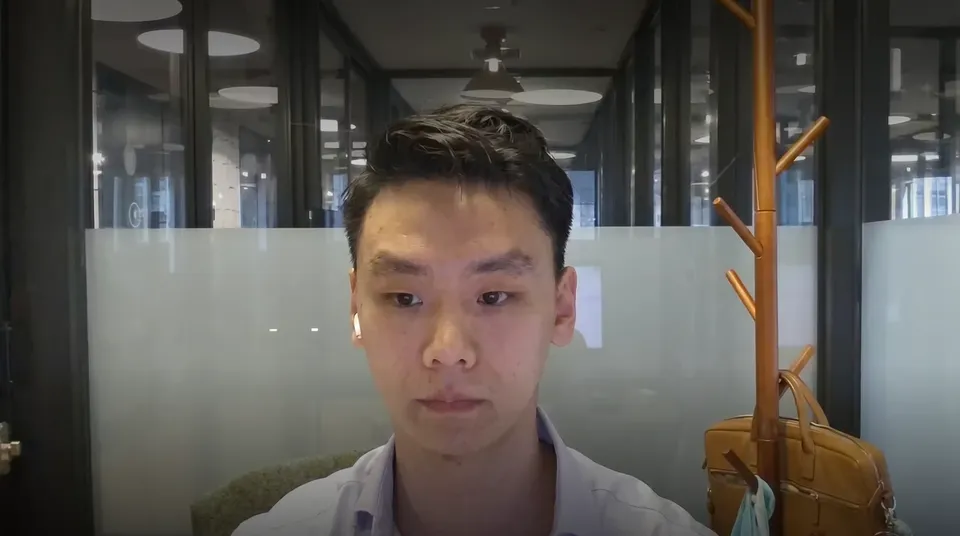 Simon Liu, HealtheraWatch the video testimonial(opens in a new tab)
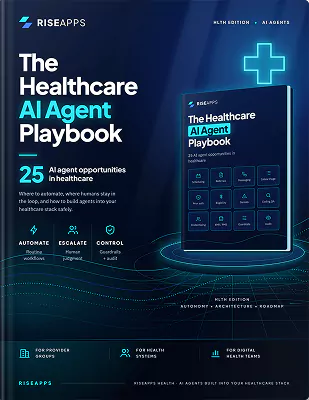
Explore 25 healthcare AI agent opportunities
The full catalog behind this page: 25 agents with frameworks for autonomy, integrations, risk, ROI, and moving from workflow selection to production.
Measure the work removed, not the automation deployed
Metrics we baseline and track:
Manual touches per workflowMinutes per transactionCost per processed taskTime to appointmentAuthorization turnaroundReferral backlogClaim agingDenial rateNo-show rateStaff escalation rateRecovered revenuePatient throughput
Automation across the healthcare stack
- EHR / EMREpic, athenahealth, eClinicalWorks, Oracle Health, NextGen
- PMS & schedulingPractice management and booking platforms
- RCM & clearinghousesBilling, claims, and remittance flows
- PayersEligibility, authorization, and claim status
- CRM & contact centerPatient communication and outreach
- Labs & imagingOrders, results, and DICOM workflows
- Medical devicesRPM and connected device data
- Legacy softwareOn-prem systems with limited or no APIs
Start with one workflow
-
1Observe
Map how the work happens today.
-
2Measure
Find delays, manual touches, error points, and cost.
-
3Redesign
Remove unnecessary steps and define the target workflow.
-
4Automate
Combine integrations, rules, and AI.
-
5Handle exceptions
Keep people where judgment is required.
-
6Measure again
Track the operational impact.
Healthcare workflow automation, answered
Do we need AI to automate our workflows?
Not always. Many steps are better served by rules and integrations, which are cheaper, faster, and fully predictable. We use AI only where a step needs interpretation, such as reading unstructured documents, and keep humans where judgment is required.
Which workflow should we automate first?
The one with high volume, many manual touches, and a clear cost: missed revenue, staff hours, or patient wait time. Eligibility, referral intake, scheduling changes, and claims follow-up are common starting points.
What if some of our systems don't have APIs?
We assess every available path: FHIR, HL7, vendor APIs, file exchange, database or reporting feeds, and middleware. Where no clean interface exists, we isolate the workaround so the rest of the workflow stays stable.
Will automation replace our staff?
The goal is to remove repetitive work that does not need a person, not the people. Staff spend their time on exceptions, patients, and decisions instead of copying data between systems.
How do you measure the impact?
We baseline the workflow first and then track manual touches, minutes per transaction, turnaround, backlog, escalation rate, and the financial effect, such as recovered revenue or fewer unpaid visits.
We already have RPA or other automations. Can you work with them?
Yes. We review what is in place, keep what works, connect it to the new workflow, and replace brittle steps, such as screen scraping, with integrations where that is more reliable.
Which workflow consumes more staff time than it should?
Show us the process, the systems, and the manual steps. We'll map where automation can remove work and what should stay human.
- Free 30-minute call with our CTO
- Workflow map with automation candidates
- NDA on request
Email biz@riseapps.biz