Turning a multi-location practice's patient experience into a revenue engine, without replacing Athena
Healthcare
EHR Integration
Engineering
$5–10K
lifetime value of a single family which was lost before
6-8 weeks
to a branded app live on top of Athena, with no migration
100%
patient experience and data now owned in-house
BACKGROUND
About the client
The client is a California pediatric group with a premium, concierge, family-centered brand and a growing footprint across multiple locations. They had built something families pay a premium for. The problem was that their growth had outrun the app their patients actually used, and every new location made the gap more expensive.
Athena was their EHR, and it did its job. But the app patients opened every day was Athena's standard one: generic, identical to every other practice's, and carrying Athena's name instead of theirs. For a premium brand, that is a daily contradiction. They couldn't shape the experience, couldn't sell the premium services families would happily pay for, and couldn't make a change without waiting on a vendor's release schedule. After years of working around it, leadership made the call to stop renting their patient experience and own it instead.
The goal was never another app for its own sake. It was to own the patient relationship outright: keep families engaged between visits, grow what each family is worth over time, offer the concierge and membership services the old app couldn't support, and set their own roadmap. All of it on top of Athena, which stays the system of record, with nothing ripped out.
Athena was their EHR, and it did its job. But the app patients opened every day was Athena's standard one: generic, identical to every other practice's, and carrying Athena's name instead of theirs. For a premium brand, that is a daily contradiction. They couldn't shape the experience, couldn't sell the premium services families would happily pay for, and couldn't make a change without waiting on a vendor's release schedule. After years of working around it, leadership made the call to stop renting their patient experience and own it instead.
The goal was never another app for its own sake. It was to own the patient relationship outright: keep families engaged between visits, grow what each family is worth over time, offer the concierge and membership services the old app couldn't support, and set their own roadmap. All of it on top of Athena, which stays the system of record, with nothing ripped out.
Location
United States
EHR
athenahealth
Compliance
HIPAA
Platform
iOS, Android, Web
Delivery
Branded Portal → Admin Backend → Membership & Engagement
The challenges
1
Every new revenue idea hit the same wall
The app patients used every day was generic, the same one every other practice has. It had no room for the premium services families will gladly pay for: concierge tiers, memberships, paid digital add-ons. And each time leadership tried to launch something new, they ran into the same vendor lock-in issue that
2
No branded patient experience limited scaling
In the App Store, families downloaded "Athena Patient," not the practice's branded interface. Leadership couldn't shape the experience, tailor it location by location, or add the touches families expect, like milestones, well-child reminders, and vaccination tracking. For a premium brand opening new locations, depending on someone else's release schedule for basic decisions was a vendor lock-in issue that limited scaling.
3
Patient drop offs caused revenue leakage
A practice grows when families keep coming back: follow-ups, well-child visits, vaccination reminders, everyday engagement. The old app was transactional, book a visit and leave. It gave families no reason to return between visits, and gave the practice no way to spot who was drifting until they were already gone. The revenue each family is worth over time was leaking quietly, with no view into where or why.
4
No safe way to fix it without betting big
Leadership faced an expensive fork: build their own engineering team or bring in a partner, with no clear picture of what to keep in Athena and what to build themselves. Get it wrong, and they would spend heavily only to land back in the same trap, a new app with the same old limits. Before committing real money, they needed certainty about exactly what to own and what to leave to Athena.
What we built
Branded pediatric patient experience
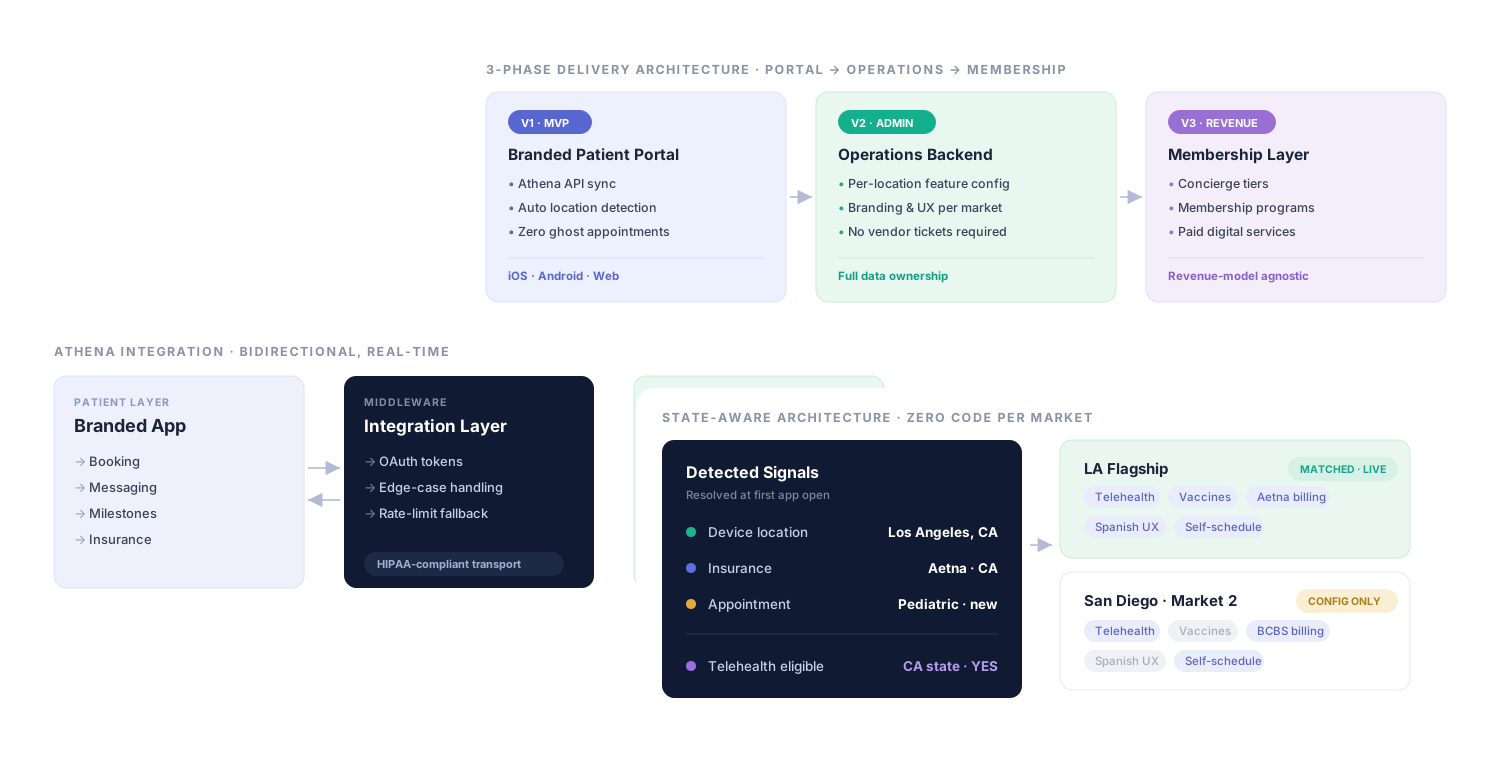
Branded Patient Portal (MVP): The core patient journey rebuilt from scratch on Athena APIs, private-label under the practice's own name. Family and child profiles, milestone and vaccination tracking, and well-visit follow-up prompts make the app a reason for families to return, not just a booking screen. Onboarding runs as a single connected sequence - guardian, child, location, provider match, portal access - with no dead ends and no ghost appointments.
Admin Backend for Full Operational Control: The backend the practice never had. Operations can configure features, adjust workflows, modify branding, and manage the experience per location without a vendor ticket. Patient data is theirs: accessible, exportable, under direct control.
Membership and Engagement Layer: The commercial infrastructure the stock app structurally couldn't support. Concierge tiers, membership programs, and paid digital services each get their own clean integration path, extensible as new offerings come online.
Admin Backend for Full Operational Control: The backend the practice never had. Operations can configure features, adjust workflows, modify branding, and manage the experience per location without a vendor ticket. Patient data is theirs: accessible, exportable, under direct control.
Membership and Engagement Layer: The commercial infrastructure the stock app structurally couldn't support. Concierge tiers, membership programs, and paid digital services each get their own clean integration path, extensible as new offerings come online.
athenahealth integration that works under the hood
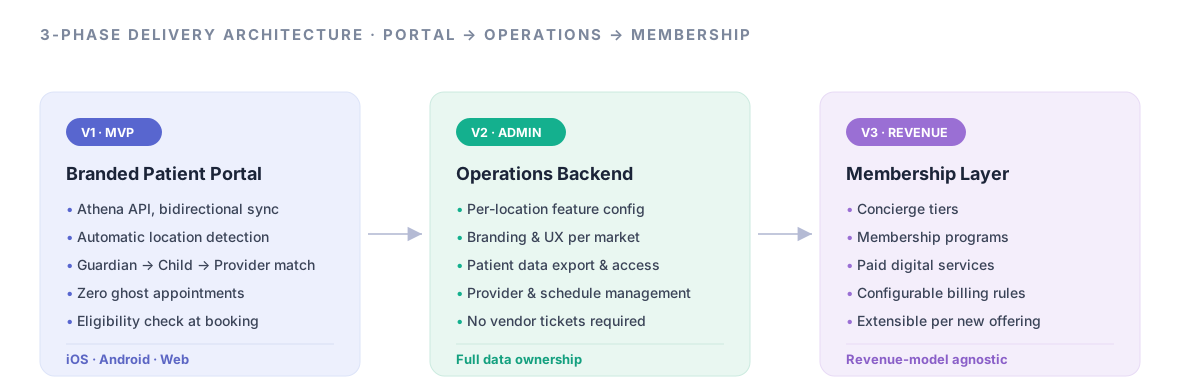
Athena has an API. Integrating it correctly for a multi-location practice - with complex scheduling rules, insurance eligibility, and billing workflows - requires engineers who have done it before.
We built on the athenahealth Marketplace partner path and ran the live-data connection through athenahealth's Solution Validation process in parallel, so it never sat on the critical path. We mapped the full integration surface before writing product code: what lives in Athena versus the custom layer, how bidirectional sync handles edge cases (cancellations, eligibility failures, no-shows), and what graceful degradation looks like when API limits are hit.
The front desk sees one unified schedule. Families see accurate availability. Neither group manages the gap between two systems.
We built on the athenahealth Marketplace partner path and ran the live-data connection through athenahealth's Solution Validation process in parallel, so it never sat on the critical path. We mapped the full integration surface before writing product code: what lives in Athena versus the custom layer, how bidirectional sync handles edge cases (cancellations, eligibility failures, no-shows), and what graceful degradation looks like when API limits are hit.
The front desk sees one unified schedule. Families see accurate availability. Neither group manages the gap between two systems.
Location-aware architecture for every new market
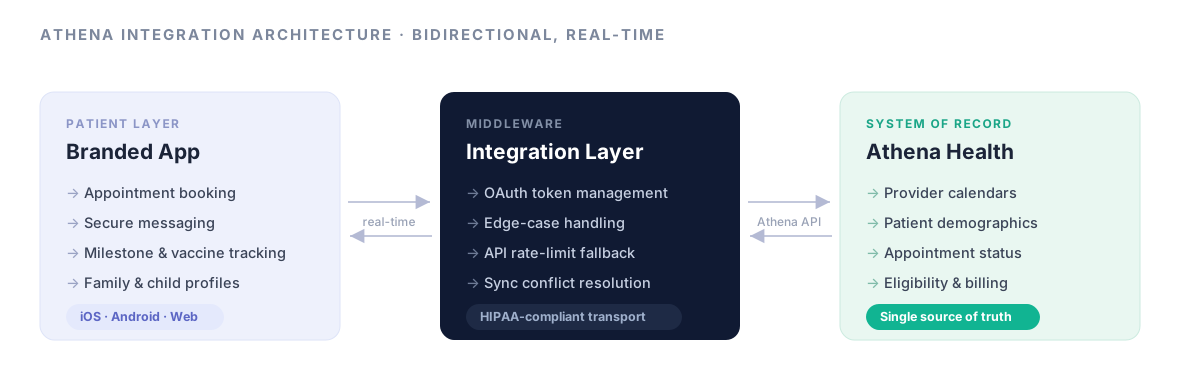
Pediatric markets differ - provider availability, payer relationships, state telehealth rules, local service mix - and those differences change faster than any vendor's release cycle. A platform designed for one location breaks in non-obvious ways when you open the next.
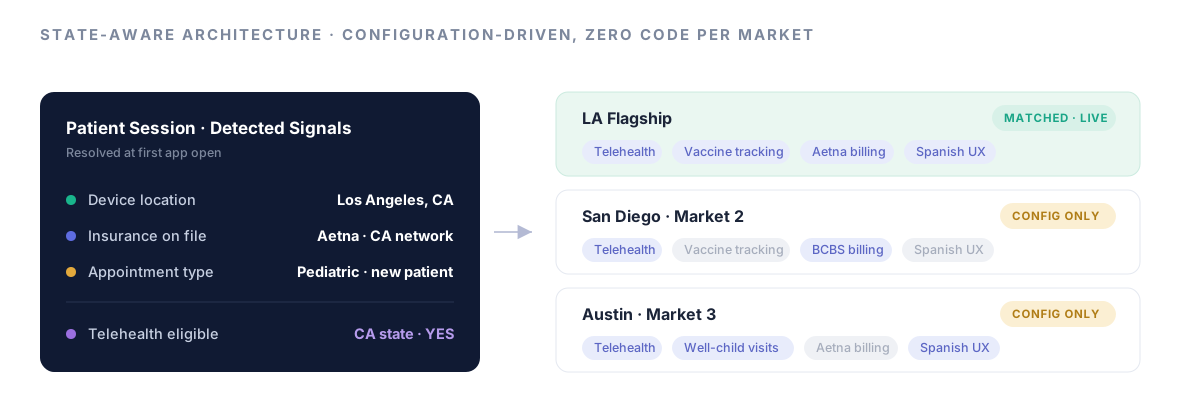
State-aware geography is built into the platform core: automatic location detection routes families to the right market context from first contact. Features, branding, service availability, and billing configuration are toggled per location from the admin backend. Adding a new market is a configuration exercise, not a development sprint.
State-aware geography is built into the platform core: automatic location detection routes families to the right market context from first contact. Features, branding, service availability, and billing configuration are toggled per location from the admin backend. Adding a new market is a configuration exercise, not a development sprint.
Achieved results
The results
100% ownership of the patient experience
The practice moved from a vendor-branded app they couldn't configure to a platform they control entirely. Their name is in the App Store, not Athena's. Patient data, administrative functionality, and the feature roadmap are internal decisions now.
New revenue sources that were locked before
With the membership and engagement layer live, the practice can activate concierge tiers, membership programs, and paid digital services that the stock Athena app couldn't support by design. The commercial infrastructure for family lifetime value and multi-market growth is in place.
Owned engagement data and retention loops
With a vendor-controlled app, the practice had no access to behavioral data: no funnel analytics, no drop-off tracking, no way to know whether families were drifting away. The custom platform gave them owned data for the first time - onboarding completion, follow-up adherence, where families fall out - alongside the milestone and well-visit mechanics that keep pediatric families engaged between visits.
Book a live demo to see it in action
RELEVANT CASES
Check our more healthcare stories
Contact Us
Please provide your info and inquiry details below.