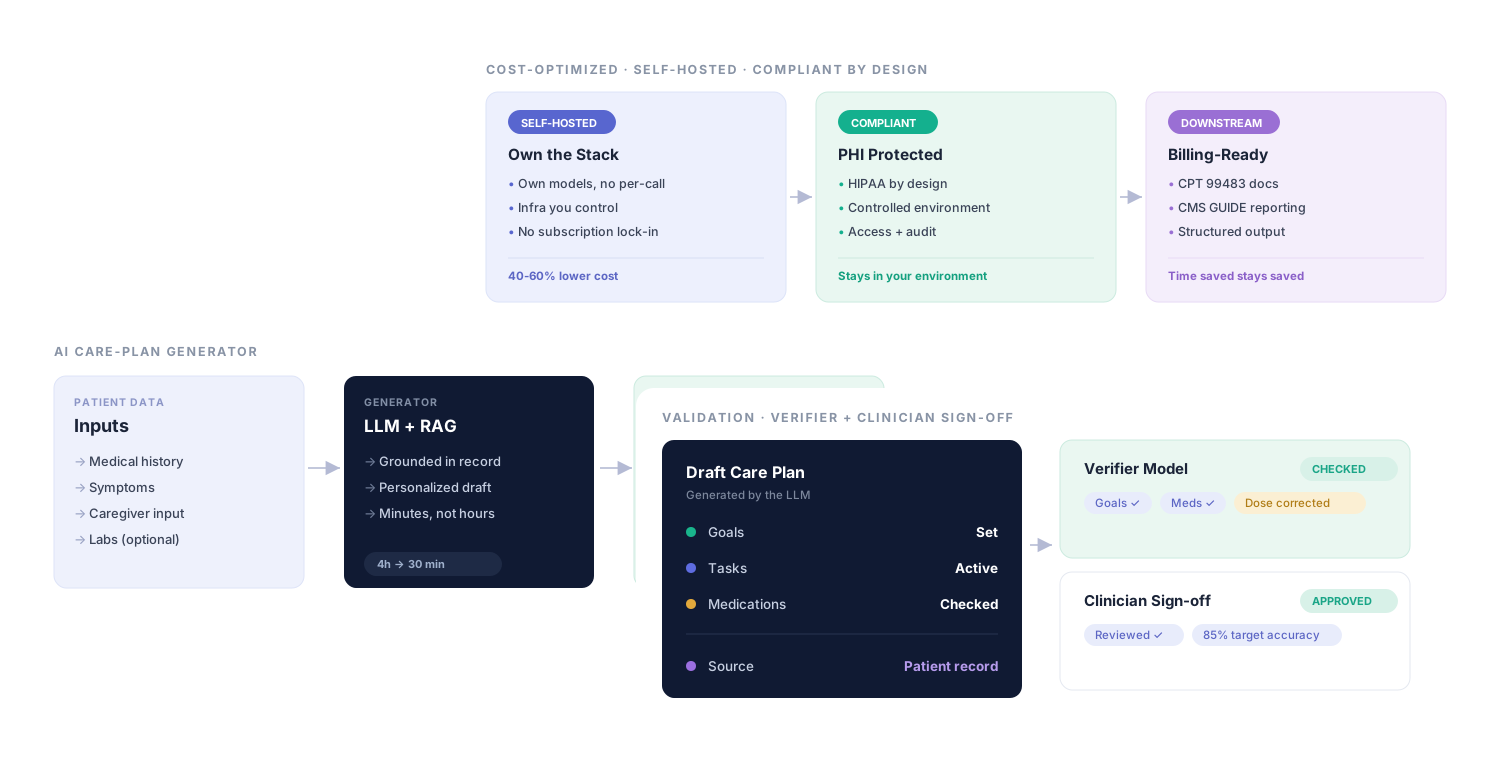
Cutting care-plan creation from 4 hours to 30 minutes with a validated AI care-plan generator
Healthcare
EHR Integration
Engineering
85%
target AI accuracy for care-plan recommendations, with clinician validation
40-60%
lower cost using self-hosted AI and infrastructure instead of per-call subscriptions
84%
less time to generate a patient care plan, from 4 hours to 30 minutes
BACKGROUND
About the client
The client is a U.S.-based at-home healthcare provider focused on chronic-condition management, with a strong dementia-care practice operating under the CMS GUIDE model. Their care teams build a personalized plan for every patient, and that plan is the heart of how care actually gets delivered.
The problem was what it cost to produce one. Building a single care plan took clinicians around four hours of manual work: pulling together medical history, current symptoms, and caregiver input, then writing it all up by hand. At that price per plan, and with a growing patient base, the most valuable work the team did was also the slowest and most expensive.
What the client wanted
They came to us with a focused goal: automate the creation of care plans so they take minutes instead of hours, keep them accurate enough for clinicians to trust and sign, and do it without the runaway cost of per-call AI and third-party services.
The problem was what it cost to produce one. Building a single care plan took clinicians around four hours of manual work: pulling together medical history, current symptoms, and caregiver input, then writing it all up by hand. At that price per plan, and with a growing patient base, the most valuable work the team did was also the slowest and most expensive.
What the client wanted
They came to us with a focused goal: automate the creation of care plans so they take minutes instead of hours, keep them accurate enough for clinicians to trust and sign, and do it without the runaway cost of per-call AI and third-party services.
Domain
At-home dementia care
Compliance
HIPAA
CPT 99483 ready
Output structured for cognitive-care documentation and GUIDE reporting
40-60% cost cut
On AI and infrastructure via self-hosting
4 hours to 30 mins
Time to generate a care plan, per patient
The challenges
1
Care plans took four hours each, by hand
Producing a single care plan meant clinicians manually synthesizing medical history, symptoms, and caregiver input, then writing it up. Four hours of senior clinical time per patient does not scale, and it put the team's most valuable work on its slowest, most expensive path.
2
Generic plans, not personalized ones
Traditional tools produced one-size-fits-all recommendations that missed individual circumstances and real-time changes, which is exactly where dementia care needs the most nuance. Personalization existed only as far as the clinician had hours to add it.
3
Clinicians do not trust unchecked AI
A care plan a clinician cannot trust is worse than none. The risk of AI inaccuracy or hallucination meant any generator had to be validated and reviewable, or it would never be signed and never be used.
4
AI and infrastructure costs would not scale
Per-call AI pricing and subscription-based third-party services made automating care-plan generation expensive at exactly the moment volume was growing. Cost optimization was not a nice-to-have; it was part of whether the solution was viable at all.
What we built
An AI care-plan generator on the patient's own data
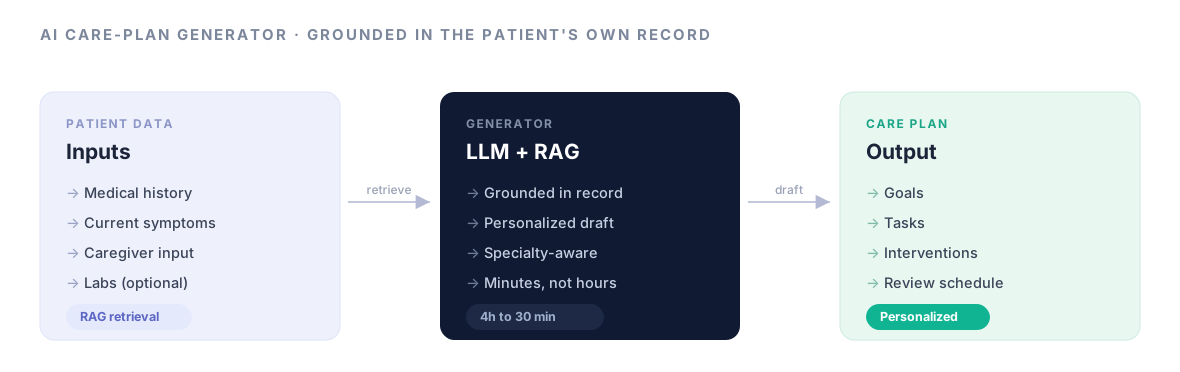
We built a care-plan generator on large language models with Retrieval-Augmented Generation, so each plan is grounded in that patient's real record rather than a generic template. It pulls together medical history, current symptoms, and caregiver input and drafts a personalized care plan in minutes, taking creation from around four hours to roughly 30 minutes. Personalization is driven by the patient's own data instead of by how many hours a clinician can spare, and senior clinical time moves from writing plans to reviewing them.
Validation that makes the output trustworthy
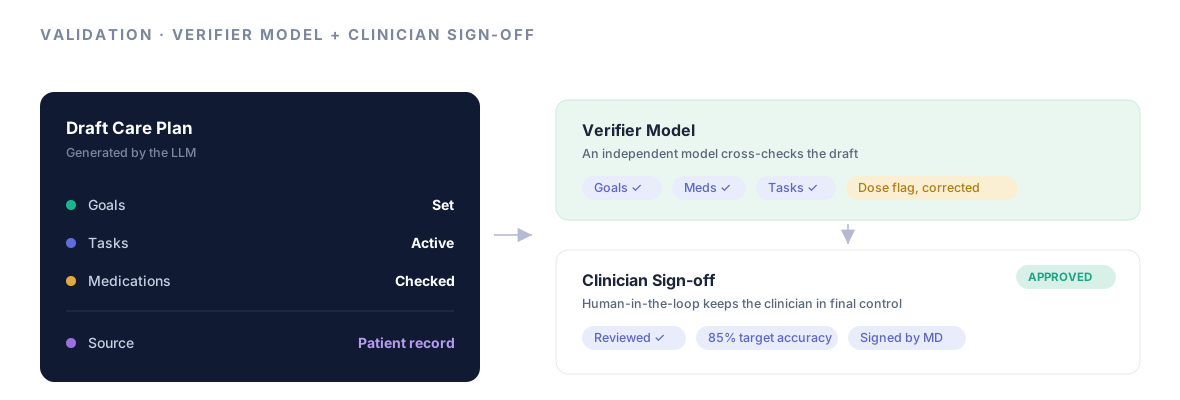
Speed means nothing if the plan cannot be trusted, so accuracy is engineered in rather than hoped for. A second, independent verification model cross-checks each generated plan before it reaches a clinician, and a human-in-the-loop step keeps the clinician in final control: the AI drafts, the clinician approves. This targets 85% accuracy on care-plan recommendations, lowers the risk of a hallucinated or unsafe recommendation reaching the patient, and earns the clinician trust that decides whether a tool like this ever gets used.
Cost-optimized, self-hosted, and compliant
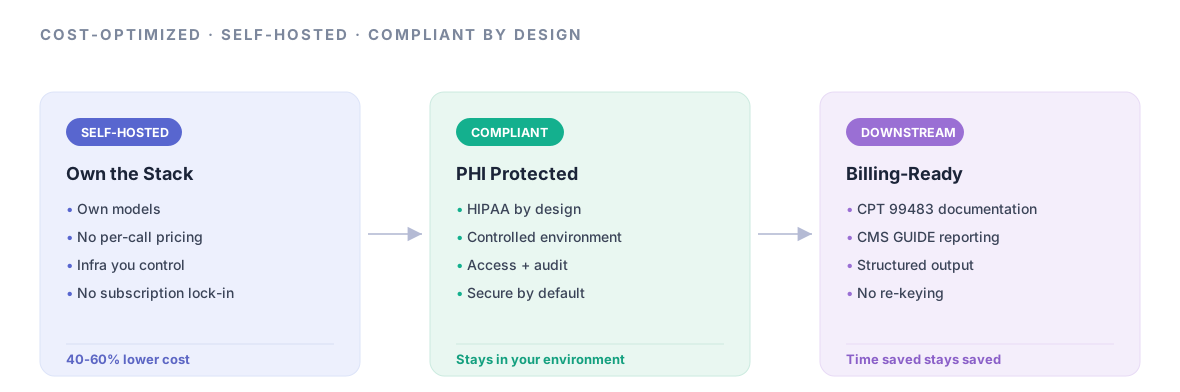
To keep generation affordable as the patient base grows, we moved off per-call and subscription pricing wherever possible, deploying self-hosted models and services on infrastructure the client controls, which cuts AI and infrastructure cost by 40 to 60 percent against subscription-based alternatives. Protected health information stays in a HIPAA-compliant, controlled environment, and the structured output is shaped for CPT 99483 cognitive-care documentation and CMS GUIDE reporting, so the time saved upstream is not lost again downstream.
Achieved results
The results
84% less time per care plan
Care-plan creation dropped from four hours to about 30 minutes per patient, turning the team's most valuable and most expensive task into a fast, repeatable one.
40-60% lower cost to run
Self-hosted AI and infrastructure replaced per-call and subscription pricing, so the cost of generating care plans no longer climbs in lockstep with patient volume.
Trusted, GUIDE-ready output
Validated, clinician-approved plans targeting 85% accuracy, structured for CPT 99483 documentation and CMS GUIDE reporting, so the automation holds up clinically and operationally.
Book a live demo to see it in action
RELEVANT CASES
Check our more healthcare stories
Scaling a women care clinic with a custom patient platform for eClinicalWorks
3 revenue streams
unlocked with the new patient platform
Growing patient capacity without additional hires - with AI care-plan automation
5x more patients per clinician
Enabled by AI-generated care plans
Turning denied infusion claims into recovered revenue with an automated denial-management pipeline
3 of 4 denial types
resolved end to end, automatically
Contact Us
Please provide your info and inquiry details below.